Babka Swirl Guide With Filling That Stays Put
Build the swirl from compatible parts
A clear babka swirl needs dough that can stretch, filling that spreads without running, and a shape that fits the pan. Follow a tested babka recipe from mixing through baking; do not combine the dough from one formula with the filling quantity and pan from another unless you have tested the result.
The dough should reach the handling condition described by the recipe before rolling. If it is sticky, slack, dry, or slow to rise, use the challah dough troubleshooting guide to organize your diagnosis while remembering that babka is its own formula.
Roll a level rectangle
Work on a clean, stable surface with one recipe-sized portion. Roll from the center outward and keep the thickness as even as possible, especially at the corners. Measure against the recipe's intended size and stop there.
If the dough resists and shrinks, cover it and let it relax as the method allows. If it becomes too soft, chill it according to the recipe. A reasonably square rectangle produces a more even log and more consistent slices.
Apply a thin, spreadable filling
Prepare the filling to the consistency the recipe describes and allow it to reach the specified condition before spreading. A very warm, loose filling can escape during rolling; a hard one can tear the dough. Spread it evenly while leaving the stated border clear.
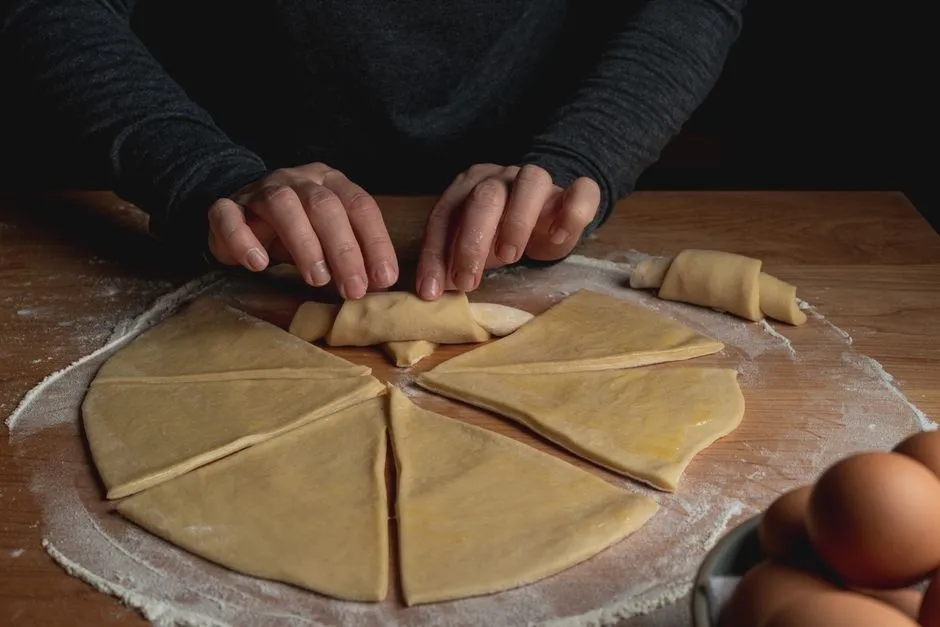
Avoid thick ridges and overloaded corners. The rugelach rolling guide uses the same principle on smaller pastries: visible generosity becomes leakage when the dough cannot contain it.
Never state that a dish or product does not contain an allergen. Ask guests directly, retain and read every packaged-ingredient label, prevent cross-contact, disclose uncertainty, and let the affected guest decide. The FDA's food-allergy guidance explains U.S. labels; elsewhere, use the local regulator's guidance. Follow FoodSafety.gov for U.S. readers or the local public-health authority's current guidance elsewhere for the ingredients, baking, cooling, and storage. Ask a qualified rabbi about dairy/meat separation or festival practice, and contact the certifying agency shown on packaging for certification questions.
Roll the log without trapping chaos
Starting at the edge specified by the recipe, roll the rectangle into a log with steady, gentle tension. Keep the long edge aligned and correct a drifting end early. Do not stretch the dough while rolling.
Finish with the seam underneath, then complete any recipe-directed chilling step. Chilling can make the filled log easier to cut cleanly. Move the log with support so it does not bend or split.
Cut and twist with control
Use a suitable sharp tool on a stable board, keeping hands clear of the blade. Cut the log according to the shaping method, often lengthwise to expose layers. Handle the cut pieces gently because the filling surfaces can be slippery.
Arrange the sections cut-side up when directed, cross them, and twist only enough to show alternating layers. Excessive twisting can squeeze filling out and weaken the structure. Pinch or tuck the ends as the recipe describes, then place the shaped loaf into the prepared pan without compressing it.
Proof and bake for the actual pan
Complete the final rise according to the recipe's visual and timing cues. Protect the pan from drafts and avoid extreme improvised heat. Apply any topping carefully so the structure is not deflated.
Follow the recipe and equipment instructions for baking, testing doneness, cooling, and any finishing syrup. Use heat-safe protection, keep children clear of ovens and hot pans, and cool the loaf on a stable surface before slicing. For a gathering, use the broader Shavuot menu plan to reserve a separate oven window and avoid moving hot pans through a crowded kitchen.
Diagnose the finished loaf
For pooled filling, review temperature, consistency, quantity, and log tension. Empty tunnels suggest uneven filling or rolling; compression points to twisting or pan fit.
Record rectangle size, dough condition, filling consistency, and shaping notes. A clear swirl comes from controlled layers and a filling quantity matched to the tested recipe and pan.